Table of Contents
Modern MRI technology provides detailed images to help diagnose a wide range of conditions
1 What is an MRI?
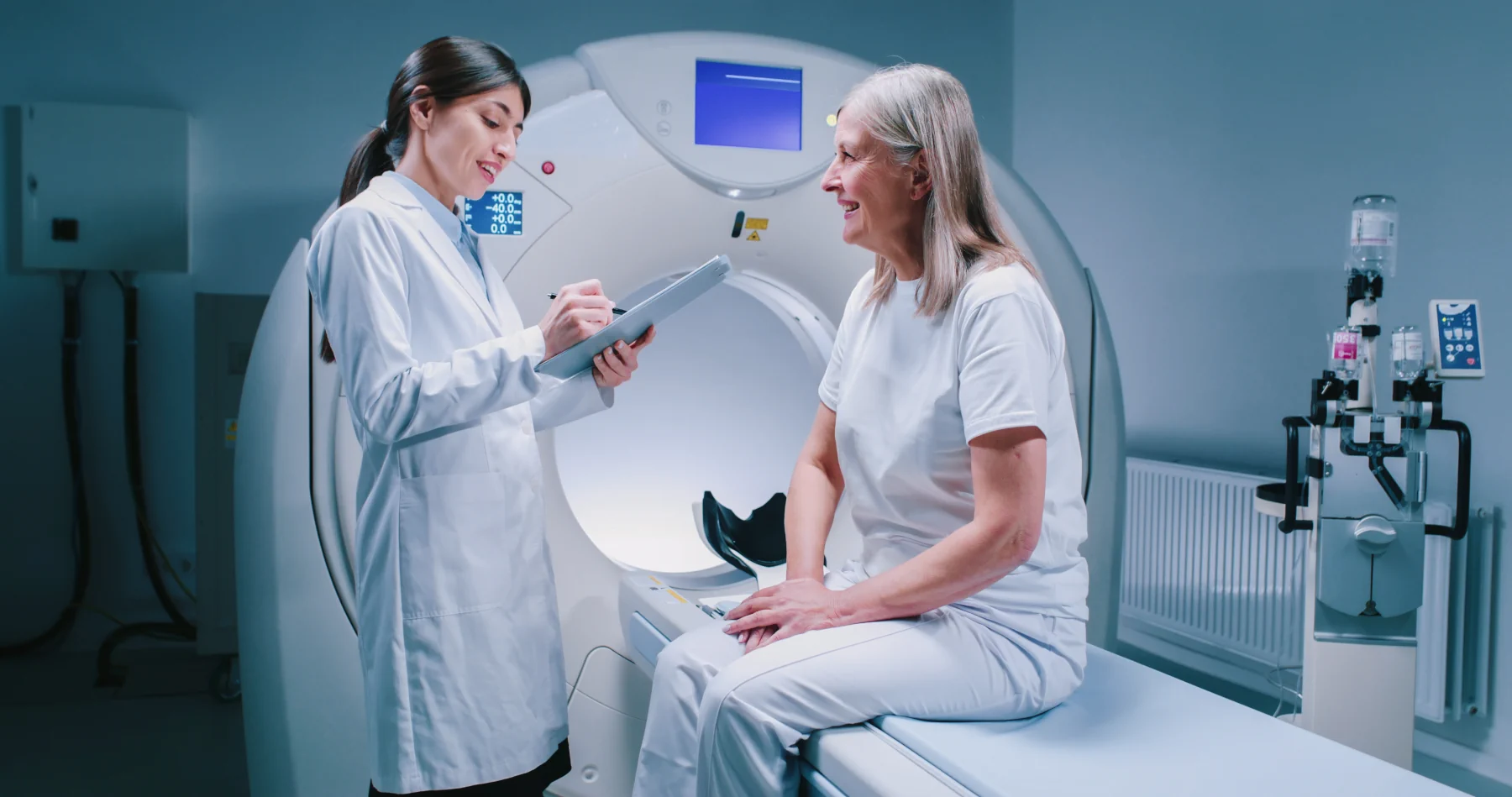
MRI (Magnetic Resonance Imaging) is a non-invasive medical imaging technique that uses powerful magnets, radio waves, and a computer to create detailed pictures of the organs, tissues, and structures inside your body.
Unlike X-rays or CT scans, MRI doesn't use radiation, making it a safer option for many patients. Instead, it relies on the body's natural magnetic properties to generate incredibly detailed images that help doctors diagnose and monitor a wide range of conditions.
Key Benefits of MRI
- No radiation exposure
- Exceptional soft tissue detail
- Can image from any angle
- Painless and non-invasive
2 How MRI Technology Works
The science behind MRI might sound complex, but the basic principle is fascinating. Your body is made up of millions of hydrogen atoms (mostly in water molecules). When you lie inside an MRI scanner, here's what happens:
Magnetic Field
A powerful magnet aligns hydrogen atoms in your body in one direction.
Radio Waves
Radio waves are pulsed through your body, disrupting the alignment.
Signal Detection
As atoms return to alignment, they emit signals that create detailed images.
Different tissues in your body contain varying amounts of hydrogen and respond differently to the magnetic field. This creates contrast in the images, allowing radiologists to distinguish between normal and abnormal tissue, identify tumors, see inflammation, and detect other medical issues.
3 Types of MRI Scans
MRI technology can be used to image virtually any part of your body. Here are the most common types:
Brain & Head MRI
Used to diagnose strokes, brain tumors, aneurysms, multiple sclerosis, and other neurological conditions.
Common for: Headaches, seizures, memory loss, dizzinessSpine MRI
Examines the vertebrae, spinal cord, and surrounding tissues to detect herniated discs, spinal stenosis, and tumors.
Common for: Back pain, neck pain, numbness in extremitiesJoint MRI (Knee, Shoulder, Hip)
Provides detailed images of cartilage, ligaments, tendons, and bones to diagnose sports injuries and arthritis.
Common for: Sports injuries, joint pain, suspected tearsAbdominal & Pelvic MRI
Images organs including the liver, kidneys, pancreas, and reproductive organs to detect diseases and abnormalities.
Common for: Abdominal pain, kidney issues, pelvic concernsCardiac MRI
Evaluates the structure and function of the heart, blood vessels, and can detect heart disease.
Common for: Heart conditions, valve problems, blood flow issuesBreast MRI
Often used as a supplemental screening tool for high-risk patients or to evaluate known breast cancer.
Common for: High-risk screening, cancer staging, dense breast tissue4 What to Expect During Your MRI
Understanding what happens during an MRI can help reduce anxiety and ensure the best possible images. Here's a step-by-step walkthrough:
The MRI Process
Check-In & Screening
You'll complete a safety questionnaire about metal implants, medical devices, and any health conditions.
Preparation
You'll change into a gown and remove all metal objects (jewelry, watches, hairpins, glasses).
Positioning
You'll lie down on a padded table that slides into the MRI machine. Pillows and straps help you stay comfortable and still.
During the Scan
The machine makes loud knocking and buzzing sounds. You'll receive earplugs or headphones. The scan typically takes 30-60 minutes.
Communication
You can communicate with the technologist through an intercom. They can see and hear you at all times.
Completion
After the scan, you can immediately return to normal activities. Results are typically available within a few days
Tips for a Successful MRI
- • Arrive 15 minutes early to complete paperwork
- • Wear comfortable, loose-fitting clothing without metal
- • Practice relaxation techniques if you feel anxious
- • Ask about open MRI options if you're claustrophobic
- • Stay as still as possible during imaging for clear results
5 How to Prepare for Your MRI
Proper preparation ensures the best possible images and a smooth experience:
What to DO
- ✓ Bring your referral or prescription
- ✓ Bring ID and if applicable, insurance cards
- ✓ Arrive 15 minutes early
- ✓ Take regular medications unless told otherwise
- ✓ Inform staff if you're pregnant
- ✓ Ask for sedation if anxious (schedule in advance)
- ✓ Bring headphones if allowed
What NOT to Do
- ✗ Don't wear jewelry or watches
- ✗ Don't wear clothing with metal zippers/buttons
- ✗ Don't bring credit cards or phones into scan room
- ✗ Don't wear makeup (some contain metal particles)
- ✗ Don't apply lotion or deodorant on scan day
- ✗ Don't eat 4-6 hours before (for abdominal scans)
- ✗ Don't move during the scan
Contrast Dye Information
Some MRIs require a contrast agent (usually gadolinium) injected through an IV to enhance image quality. This helps visualize blood vessels, tumors, and inflammation more clearly.
Important: Inform your doctor if you have kidney problems, as contrast may not be safe for patients with severe kidney disease.
6 Safety and Risks
MRI is one of the safest medical imaging procedures available. However, there are important safety considerations:
Who Cannot Have an MRI?
- Pacemakers or defibrillators - Magnetic field can interfere with these devices
- Cochlear implants - Can be damaged by the magnetic field
- Metal fragments in eyes - Can move and cause injury
- Certain aneurysm clips - Some older clips are not MRI-safe
Usually Safe (Inform Your Doctor)
- • Joint replacements (hip, knee)
- • Dental implants and fillings
- • IUD (intrauterine device)
- • Surgical clips or staples (after healing)
- • Most stents
- • Tattoos (rarely cause warming or irritation)
Claustrophobia Solutions
If you experience anxiety in enclosed spaces, several options are available:
- • Open MRI machines - Less confining than traditional tunnels
- • Mild sedation - Anti-anxiety medication before the scan
- • Music or guided imagery - Distraction techniques
- • Support person - Have someone in the room with you
7 Understanding MRI Costs
MRI costs vary dramatically depending on where you get your scan. Understanding pricing can help you make informed decisions and save significantly.
Average MRI Costs by Location
Money-Saving Tips
- • Shop around - Prices vary by 300-400% for the same scan
- • Ask for cash/self-pay rates - Often lower than insurance rates
- • Use independent imaging centers - Significantly cheaper than hospitals
- • Check if pre-authorization is required - Avoid surprise denials
- • Request an itemized bill - Look for duplicate charges or errors
USRad's Transparent Pricing Promise
At USRad, we believe healthcare costs should be transparent. Our MRI prices range from $250-$600 depending on the body part, with no hidden fees or surprise bills.
Get Your Price Quote8 Understanding Your Results
After your MRI, a board-certified radiologist will analyze the images and create a detailed report for your referring physician.
What Happens Next
Radiologist Review
A specialized doctor examines your images and writes a comprehensive report
Results to Your Doctor
Your referring physician receives the report and reviews it in context of your symptoms
Treatment Plan
Your doctor discusses findings with you and recommends next steps
USRad Fast Results
At USRad, your imaging report is delivered directly to your dashboard as soon as the radiologist completes it. You'll receive an email notification the moment it's ready — no waiting for phone calls or doctor follow-ups.
Remember, only your doctor can provide a complete interpretation of your MRI results in the context of your medical history, physical examination, and other tests. Don't hesitate to ask questions about anything you don't understand.
About the USRad Healthcare Team
This guide was created by USRad's team of board-certified radiologists, medical imaging technologists, and patient care specialists. Our mission is to make medical imaging accessible, affordable, and understandable for everyone.
Ready to Schedule Your MRI?
Get transparent pricing and fast results at USRad. No insurance required.
Call us: 1-866-USRad-24 • Mon-Fri 9am-5pm EST