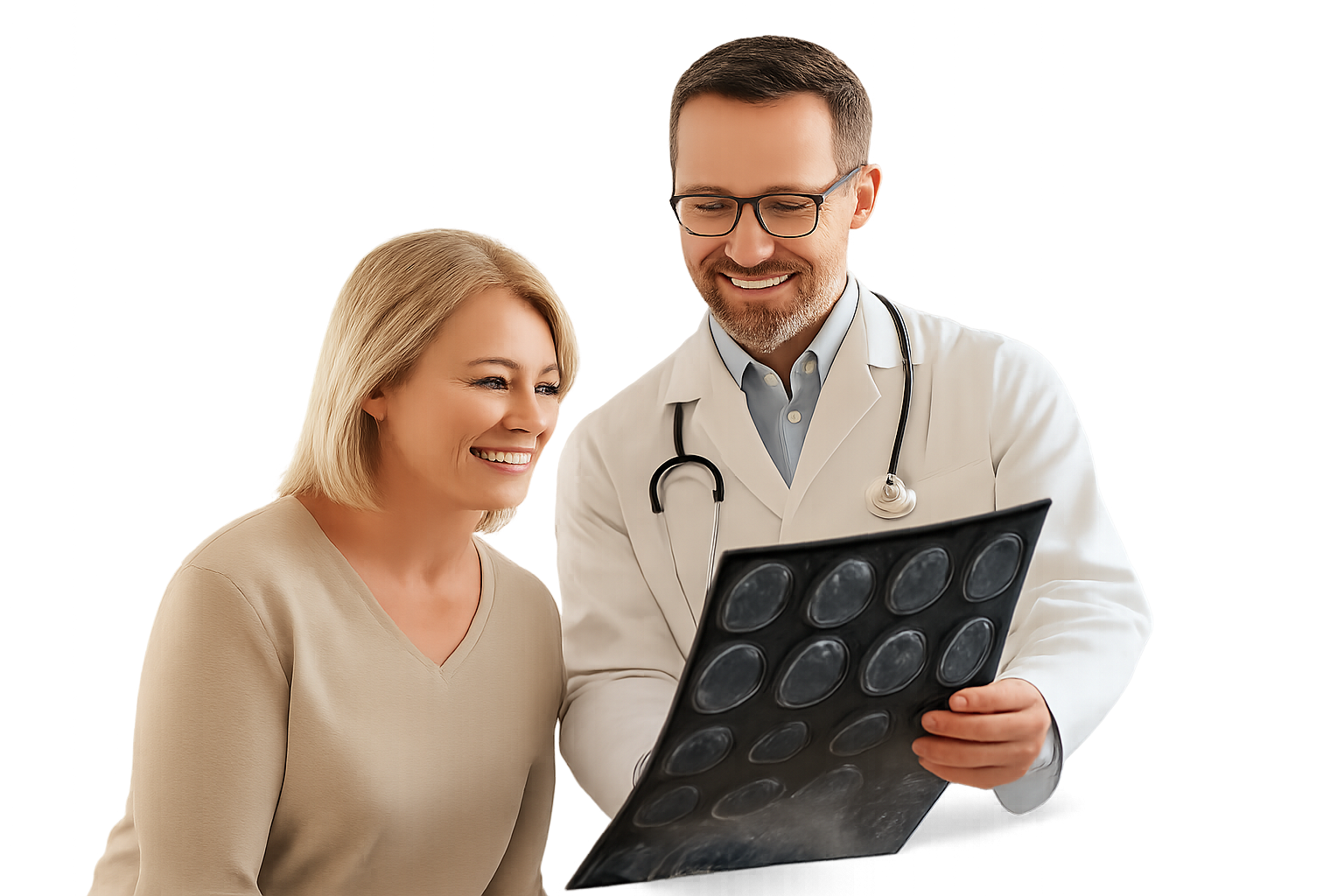
🚀 The AI Revolution is Here
Artificial intelligence isn't replacing radiologists—it's making them better, faster, and more accurate. AI is detecting cancers earlier, reducing false positives, and making medical imaging more accessible and affordable. Here's what you need to know.
94%
Accuracy in cancer detection
Matching expert radiologists
50%
Faster diagnosis times
With AI assistance
30%
Reduction in false positives
Fewer unnecessary biopsies
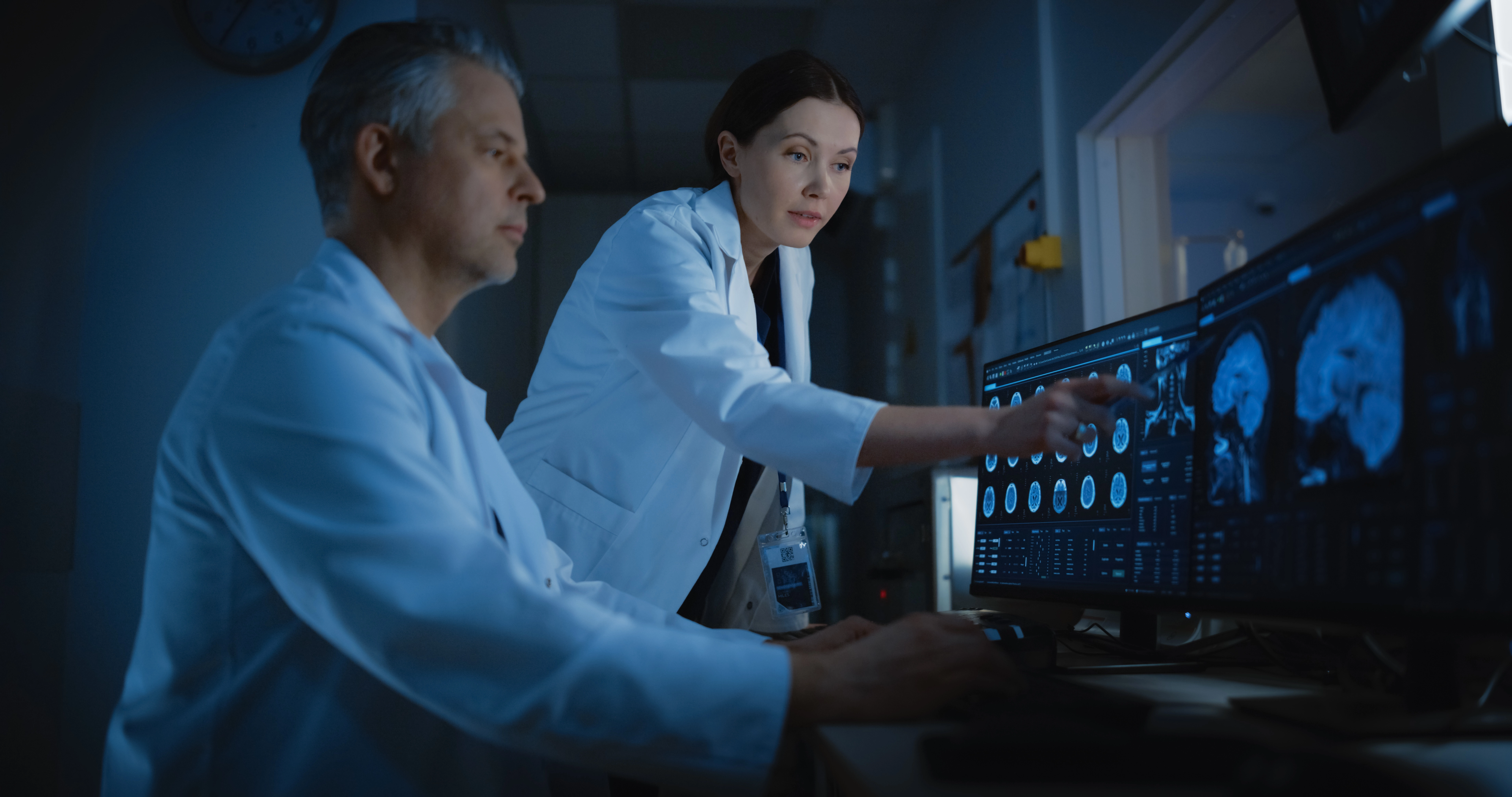
AI algorithms analyze millions of medical images to detect patterns invisible to the human eye
Imagine a technology that can review your MRI in seconds, spot a tiny tumor a human might miss, and predict your risk of disease before symptoms appear. That's not science fiction—it's happening right now with artificial intelligence in medical imaging. This revolution is making diagnosis faster, more accurate, and more accessible than ever before.
1 What is AI in Medical Imaging?
AI in medical imaging uses machine learning algorithms—computer programs that learn from millions of medical scans—to assist radiologists in detecting, diagnosing, and predicting diseases.
How AI "Learns" to Read Medical Images
Training Phase
AI analyzes millions of labeled medical images (e.g., "this scan shows a tumor" vs "this scan is normal")
Pattern Recognition
The algorithm learns to identify patterns, shapes, densities, and textures associated with diseases
Validation
AI is tested on new images it hasn't seen before to measure accuracy
Clinical Deployment
Once validated, AI assists radiologists in real-time diagnosis
Continuous Improvement
AI gets better over time as it processes more scans and receives feedback
💡 Think of AI as a "Second Set of Eyes"
AI doesn't replace radiologists—it works alongside them. The radiologist remains in control, making the final diagnosis. AI simply flags areas of concern and helps catch things that might be missed.
2 AI in Action: Current Applications
AI is already being used in hospitals and imaging centers worldwide. Here are the most impactful applications today:
Breast Cancer Detection (Mammography)
Most mature AI application
What AI does: Analyzes mammograms to detect early signs of breast cancer, including tiny calcifications and subtle masses.
Proven Results:
- • 13% increase in cancer detection rate (Swedish study, 2023)
- • 20% reduction in false positives (fewer unnecessary callbacks)
- • 50% reduction in radiologist workload for screening
- • FDA-approved systems from Transpara, iCAD, and others
Patient Impact: Earlier detection means more treatment options and better survival rates.
Lung Cancer Screening (CT Scans)
Finding nodules missed by human eyes
What AI does: Identifies and measures lung nodules (small growths) that could be early-stage cancer.
Key Benefits:
- • Detects nodules as small as 3mm
- • Tracks growth over time automatically
- • Reduces false positives by 30%
- • Prioritizes high-risk cases for urgent review
Stroke Detection (Brain CT/MRI)
Every minute counts in stroke care
What AI does: Instantly detects signs of stroke on brain scans and alerts the stroke team.
Life-Saving Speed:
- • Analysis in under 60 seconds
- • Automatic alerts to stroke team
- • 30-minute reduction in time-to-treatment
- • Better outcomes and reduced disability
Critical Fact: In stroke, "time is brain." Faster detection = more brain tissue saved.
Other AI Applications in Imaging
🦴 Fracture Detection
X-rays analyzed for subtle fractures, especially in ER settings
💓 Cardiac Analysis
Measuring heart function, detecting coronary artery disease
👁️ Diabetic Retinopathy
Eye scans showing diabetes-related damage
🫀 Abdominal Imaging
Liver disease, kidney stones, pancreatic abnormalities
🦷 Dental Imaging
Cavity detection, bone loss, root canal needs
📊 Osteoporosis Screening
Bone density analysis from routine CT scans
3 What AI Means for You: Patient Benefits
AI in medical imaging isn't just cool technology—it directly improves your healthcare experience:
Earlier Detection
AI spots diseases at earlier, more treatable stages—often before symptoms appear. Early detection dramatically improves survival rates for cancers and other serious conditions.
Faster Results
AI can analyze your scan in seconds, helping radiologists provide reports faster. This means less waiting and quicker treatment decisions—especially critical in emergencies.
More Accurate Diagnosis
AI reduces human error and fatigue. When radiologists work with AI, diagnostic accuracy improves by up to 15%—meaning fewer missed findings and fewer false alarms.
Fewer False Positives
AI helps distinguish between benign (harmless) and suspicious findings, reducing unnecessary callbacks, biopsies, and the anxiety that comes with them.
Lower Costs
AI increases efficiency, reducing the time radiologists spend on routine screening. This can lower imaging costs over time, making healthcare more affordable.
Better Access
AI can assist in areas with radiologist shortages, enabling teleradiology and bringing expert-level analysis to rural or underserved communities.
4 The Near Future: What's Coming Next
The next 3-5 years will bring even more revolutionary AI capabilities to medical imaging:
🔮 Predictive AI: Disease Before Symptoms
The future: AI analyzing subtle patterns in your scans to predict diseases before they develop.
Examples in Development:
- • Predicting Alzheimer's 6+ years before symptoms
- • Identifying heart attack risk from routine chest X-rays
- • Detecting early signs of diabetes from eye scans
- • Forecasting osteoporosis progression
🧬 Personalized Treatment Planning
The future: AI combining imaging with genomics to recommend the most effective treatment for YOUR specific tumor or condition.
Oncology AI can now predict which chemotherapy will work best based on tumor characteristics visible in imaging—leading to precision medicine.
🎮 Real-Time Surgical Guidance
The future: AI overlaying real-time imaging during surgery to help surgeons see exactly where to cut.
Think GPS navigation, but for surgery—AI shows the surgeon the safest path while avoiding critical structures like nerves and blood vessels.
🖼️ Synthetic Medical Images
The future: AI generating "virtual" scans from other data, reducing the need for repeat imaging.
Example: AI creating a "pseudo-MRI" from a CT scan, giving doctors MRI-quality information without the cost or time of an actual MRI.
5 Addressing Concerns: AI Safety & Ethics
With any new technology, concerns are natural. Here are the most common questions and honest answers:
❓ Will AI replace radiologists?
No. AI is a tool that makes radiologists better, not a replacement. Here's why radiologists remain essential:
- • AI can't understand context (medical history, symptoms, other tests)
- • AI can't communicate with patients or other doctors
- • AI can't handle rare or unusual cases outside its training
- • Medical liability requires a licensed physician's oversight
- • Human judgment is irreplaceable for complex decision-making
The consensus: "Radiologists who use AI will replace radiologists who don't."
🔒 Is my medical data safe with AI?
Yes, with proper safeguards. Medical AI follows the same privacy laws (HIPAA) as all healthcare providers:
- • Your scans are de-identified (personal info removed) before AI analysis
- • AI systems are HIPAA-compliant and encrypted
- • No AI company can see your name or identifying information
- • You have the same privacy rights as with human-only care
⚖️ Can AI be biased?
Yes, but it's being addressed. AI can inherit biases from training data:
The Problem: If AI is trained mostly on images from one demographic group, it may be less accurate for others.
The Solution:
- • Diverse training datasets including all ethnicities, ages, and body types
- • Regular audits for fairness and accuracy across populations
- • FDA requirements for demographic performance reporting
- • Ongoing research to eliminate bias
❌ What if AI makes a mistake?
The radiologist catches it. AI provides suggestions, but the final diagnosis always comes from a human doctor who:
- • Reviews all AI findings critically
- • Can override or correct AI suggestions
- • Considers the full clinical picture
- • Takes legal responsibility for the diagnosis
Bottom line: AI + Human = Better than either alone. The radiologist is your safety net.
6 What You Should Know as a Patient
Key Takeaways for Patients
AI is already helping: Many imaging centers use AI today. You may have already benefited from it without knowing.
You can ask: "Does this facility use AI?" Most are happy to explain how it improves their accuracy.
AI doesn't add cost: AI assistance typically doesn't increase your bill. It's a behind-the-scenes efficiency tool.
Radiologists still read your scan: AI is an assistant, not a replacement. Your results come from a board-certified physician.
Faster results are coming: As AI becomes more common, turnaround times for imaging reports will continue to decrease.
Your privacy is protected: AI follows the same strict healthcare privacy laws as everything else in medicine.
The Bottom Line
AI in medical imaging is one of the most exciting advances in modern medicine. It's making diagnosis faster, more accurate, and more accessible—while keeping experienced radiologists at the center of care. The future is bright, and it's already here.
2025
AI is mainstream in medical imaging
Better
Outcomes for patients everywhere
∞
Potential still being discovered
Experience AI-Enhanced Imaging at USRad
Our state-of-the-art facilities use FDA-approved AI technology to provide faster, more accurate diagnoses—with transparent pricing and no insurance required.
Call us: 1-866-USRad-24 • Mon-Fri 9am-5pm EST